
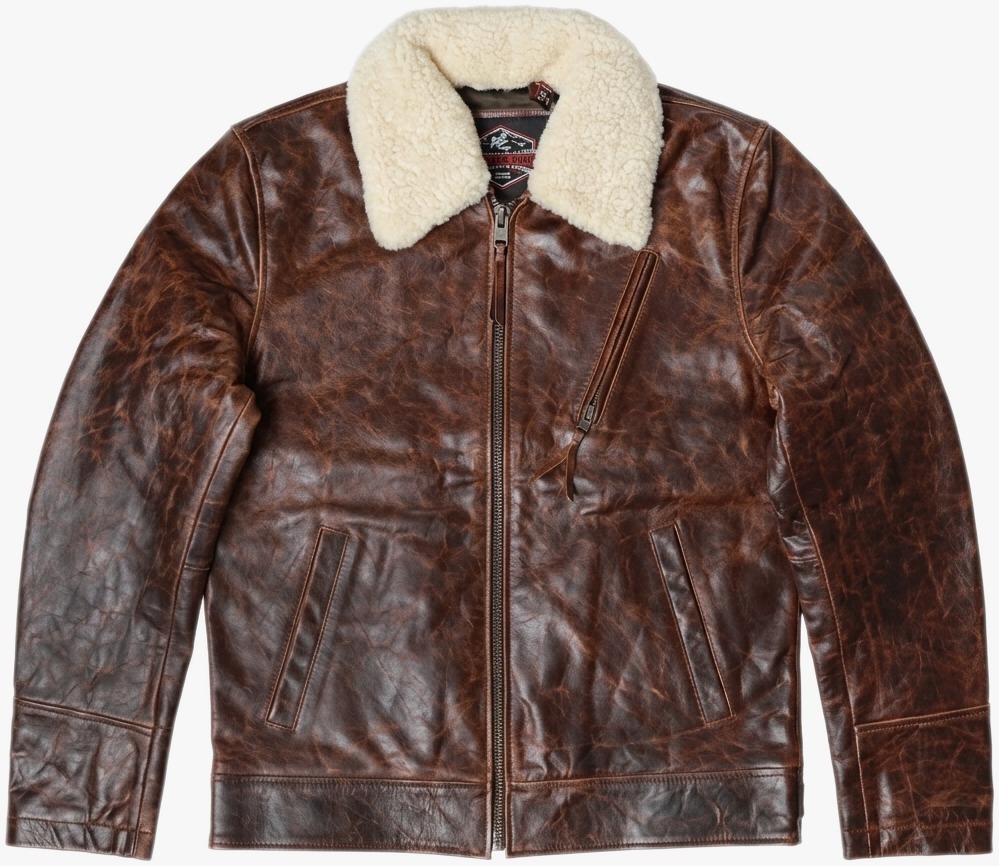
How to Choose a Handcrafted Leather Jacket That Lasts
How to Choose a Handcrafted Leather Jacket That Lasts: A Buyer's Guide for Winter
Buying a leather jacket online feels like a gamble. Photos lie, "genuine leather" gets stretched to mean almost anything, and a jacket that looks sharp on a model can land stiff, thin, or poorly stitched. If you're searching for a handcrafted leather jacket that actually holds up through a Canadian or US winter, here's what separates a real one from a factory knockoff — and how to pick the right style for your climate.
What "Handcrafted" Actually Means in a Leather Jacket
The word gets thrown around loosely, but a genuinely handcrafted leather jacket involves hide selection, hand-cutting panels to match grain direction, and stitching done by skilled leatherworkers rather than a fully automated assembly line. Small-batch workshops — like ours at Straven Crafts, where every jacket is designed in Toronto and handcrafted in-house — can catch inconsistencies in the hide and adjust fit details that mass production simply skips over.
The giveaway signs of a truly handcrafted piece:
- Visible, even stitching with no loose threads at stress points (cuffs, pocket edges, collar seams)
- Natural grain variation across the hide — real leather isn't perfectly uniform
- Hardware (zippers, snaps) that feels substantial, not lightweight plastic-coated metal
- A leather smell, not a plastic or synthetic coating smell
Genuine Leather vs. Full-Grain vs. Cowhide: What's the Difference?
This is where most buyers get confused, and it matters for durability:
- Genuine leather is a broad term — technically accurate, but it's also the lowest tier of real leather, often made from leftover layers of the hide.
- Full-grain leather uses the outermost, strongest layer of the hide with the grain intact. It's more durable and develops a better patina over time.
- Cowhide refers to the animal source (cattle) rather than the grade — a cowhide jacket can be full-grain or a lower grade, so it's worth asking which cut was used.
A well-made full-grain cowhide jacket will outlast a "genuine leather" jacket by years, even though both are technically real leather.
Shearling Collar vs. No Collar: Which Suits Colder Climates?
If you're shopping from somewhere that actually gets winter — most of Canada, the northern and midwestern US — a shearling or sherpa collar isn't just a style choice, it's functional insulation around your neck, where you lose the most body heat. Look for:
- A collar that snaps or zips closed, not just a fixed open collar
- Cotton or quilted lining through the body, not just a thin polyester liner
- A slightly looser cut that allows a sweater or hoodie underneath without restricting movement
For milder winters or layering over indoor wear, a classic biker or bomber silhouette without the extra collar bulk tends to be more versatile.
How to Judge Fit Without Trying It On
Online leather jacket shopping means getting the fit right from a size chart alone. A few rules that hold regardless of brand:
- Shoulders should sit at your actual shoulder seam — leather doesn't stretch like fabric, so a jacket that's slightly loose in the shoulders will always look off.
- Sleeve length should hit right at your wristbone — leather cuffs that are too long bunch unattractively; too short looks like you've outgrown it.
- Leave room for one layer underneath — if you plan to wear it over a hoodie or sweater in winter, size up slightly from your typical jacket size.
Caring for a Leather Jacket Through Winter
Salt, slush, and sudden temperature changes are harder on leather than most people expect. A few habits extend a jacket's life significantly:
- Let it air dry naturally if it gets wet — never use direct heat (radiators, hair dryers), which cracks the leather
- Condition the leather every few months with a proper leather conditioner, especially before and after winter
- Store it on a wide hanger, not a wire one, to keep the shoulder shape
Final Thoughts
A handcrafted leather jacket is an investment piece, not a disposable one — the difference between a jacket that looks better with age and one that cracks after a single winter usually comes down to the grade of leather and the quality of construction, not the price tag alone. Know what you're buying, check the construction details above, and pick a silhouette suited to your actual climate rather than just the photo.